What a Weekly Pool Visit Should Cover in North Valley Heat
Every item on the weekly checklist has a reason behind it, and the desert makes most of those reasons more urgent.
October 27, 2026 · 4 min read
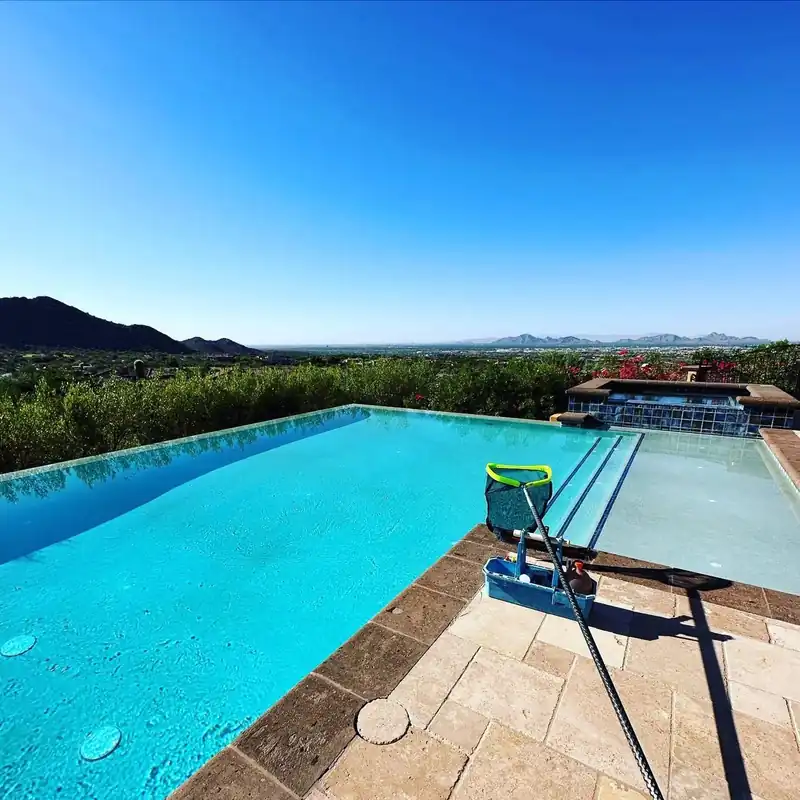
A pool can look fine from the patio and still be drifting out of balance underneath. In the north valley, where summer water temperatures climb and the sun does a lot of the damage, a weekly visit exists to catch small problems while they're still cheap to fix. Here's what a weekly visit from Lakeside Pool Service covers, and the reason behind each step.
Brushing and skimming
Every visit starts with brushing the walls and the tile line. Algae doesn't show up all at once. It starts as a thin film that clings to plaster, and brushing breaks that film apart so the chlorine can reach it. The tile line gets the same treatment because that's where sunscreen oils, dust and mineral residue collect.
Skimming comes next, top and bottom. Palo verde blossoms, mesquite pods, insects and wind-blown grit land on the surface all week, and some of it sinks. Leaves that settle on the floor break down and feed algae. The pool gets vacuumed if it needs it, which depends on what the week brought and how much debris made it past the skimmer.
Baskets and the water chemistry
The skimmer and pump baskets get emptied every time. It sounds minor, but a packed basket restricts flow, and a pump that can't pull enough water works harder and runs hotter. In July that's the last thing the equipment needs.
Then comes the part most owners can't see: balancing pH and chlorine. Sun and heat burn chlorine off quickly in the desert, and pH drifts with swimmers, rain, dust and whatever's in the fill water. Testing each week and adjusting a little at a time keeps the water balanced. Waiting for it to turn cloudy and then correcting it hard is the more expensive way to run a pool, and it's rougher on plaster and equipment.
Filter pressure and backwashing
The pressure gauge on the filter is one of the best early warning signs on the whole pad. Each visit includes a check of the filter pressure, and what matters is the trend. A reading that creeps up from week to week means the filter is loading with debris and oils and the pump is pushing against more resistance.
When it's called for, the filter gets backwashed. That's the step where water is run through the filter in reverse to flush out what it's holding. It isn't a substitute for a deeper cleaning, which is why most DE and cartridge filters are cleaned twice a year, for an additional charge that depends on the type and size of the filter.
Equipment and water level
Every visit also includes a look over the equipment for leaks and damage. A weeping union, a cracked pump lid or a worn o-ring rarely starts as an emergency. It starts as a damp spot or a small drip, and a weekly set of eyes on the pad is how it gets noticed before it becomes a failed pump on a 110 degree afternoon.
The water level gets checked too. Dry air and heat pull a lot of water out of a pool, and a low level lets the skimmer suck air, which can make the pump lose prime and run dry. A level that drops faster than evaporation would explain is also worth watching, since it can point to a leak somewhere.
The report that lands in your inbox
Lakeside runs its routes on a pool-specific software called Skimmer. After the visit, a service report goes to your email each week, with photos from the pool. There are no paper slips left on the patio table and no route book that only one person understands. The log of every visit lives in one place.
That report is worth reading, even when it says nothing unusual. Look at the photos of the water and the equipment, and keep an eye on any note about filter pressure or a part that's starting to wear. If something needs work beyond routine service, a pump, a filter, a light or automation, the report is where it gets flagged first. Billing runs through Stripe, so payment can be electronic, with autopay and card-on-file options if you'd rather not think about it.
Why weekly, and not every other week
Pool water in the north valley changes faster than most people expect. A warm week, a dust storm or a few heavy swim days can push a pool from fine to cloudy in under seven days, and algae multiplies quickly once it gets a foothold. Weekly service keeps each correction small. The brushing, the skimming and the pressure check all repeat so the pool never gets far from where it should be.
If you're sizing up a pool service, ask to see a sample report and ask what the visit includes, line by line. A clear answer tells you a lot. If you'd like to see how Lakeside does it for pools in Paradise Valley, Scottsdale, Carefree, DC Ranch, Desert Mountain, Desert Hills or Norterra, call or text Tony at (480) 363-6158 or email tony@lakesidepoolservicellc.com. The office is open Monday through Friday, 6am to 5pm.
Lakeside Pool Service LLC, (480) 363-6158
Call (480) 363-6158More articles
DE or Cartridge Filter, and Why Both Need Cleaning Twice a Year
Your filter does the quiet work of keeping the water clear, and it can only do it while it isn't clogged.
Why North Valley Pools Turn Green After Monsoon Season
A green pool usually has a few causes stacked together, and most of them trace back to circulation and chlorine demand.