Why North Valley Pools Turn Green After Monsoon Season
A green pool usually has a few causes stacked together, and most of them trace back to circulation and chlorine demand.
October 27, 2026 · 3 min read
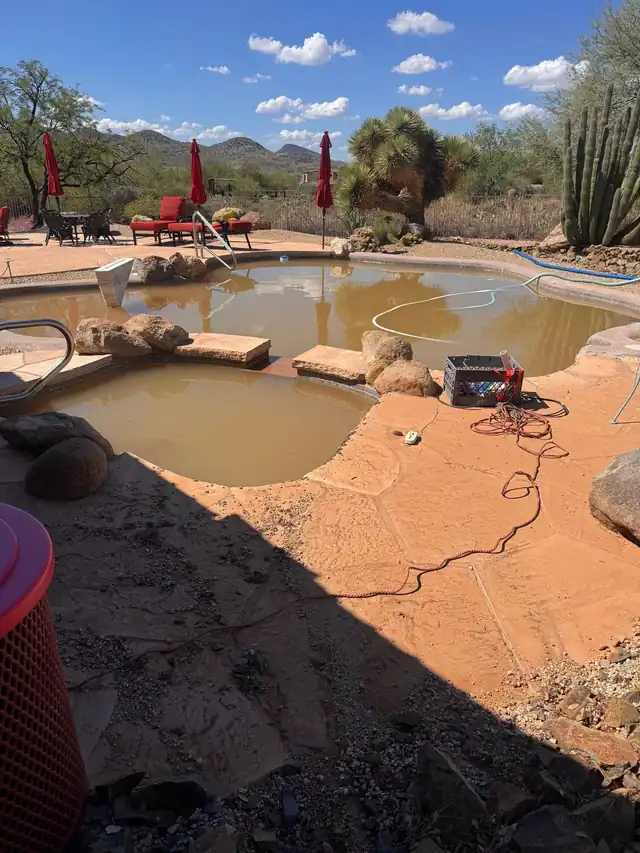
Monsoon season is over, and plenty of north valley pool owners are looking at water that went from blue to green sometime between July and now. It feels like it happened overnight, but it rarely did. A few ordinary things stacked up, and the pool crossed a line. Understanding them helps you know what a cleanup involves and how to stay clear of the next one.
What turns the water green
Green water is algae, and algae needs three things: warmth, light and food. The north valley supplies the first two for most of the year. The food comes from leaves, dust, pollen, rain runoff and anything organic that lands in the water. The only thing holding it back is sanitizer, and the sanitizer can only keep up if there's enough of it, the water is balanced, and the filter is moving water through the pool.
Take away any one of those and algae gets its opening. In summer, with water temperatures well into the 90s, the opening can be a matter of a few days.
What the monsoon does to a pool
A monsoon storm hits a pool from several directions at once. Wind throws leaves, grit and dust into the water, and a big dust storm can coat the surface. Heavy rain dilutes the chemistry, adds organic material washed off roofs and decks, and can push the pH around. Then comes the humidity and the heat that follows, which is when chlorine is used up fastest.
Storms also knock out power. If the pump is off for hours, or a clogged basket or dirty filter cuts flow, the water sits still while everything above is happening. Circulation is what carries sanitizer to every corner of the pool, so a pool that isn't moving can start turning green while the chlorine level on a test strip still looks acceptable.
What a green pool cleanup involves
Cleaning up a green pool is a process, and it usually takes days instead of hours. The general order looks like this.
- Remove debris from the surface and the floor so the sanitizer isn't wasted on leaves.
- Test the water and correct the balance, since sanitizer works poorly when pH is off.
- Raise the sanitizer to a level that kills the algae, then keep the pump running as long as needed.
- Brush the walls and floor repeatedly so dead and dying algae lift off and reach the filter.
- Clean the filter as the load builds, because it clogs quickly while it's catching dead algae.
- Vacuum what settles, retest and rebalance once the water clears.
The filter is the step people underestimate. A heavily green pool can load a filter faster than any normal week would, so the pressure gauge climbs and the filter needs to be backwashed or cleaned during the process. Lakeside does green pool cleanups and filter cleaning as part of the same job when it's needed.
What not to do
Draining a green pool looks like the fast answer, but it rarely is. An empty pool can be damaged by groundwater pressure and by the heat on exposed plaster, and the algae is easier to kill in the water than out of it. It's also tempting to pour in several chemicals at once, which can make the water worse and can be unsafe if products get mixed. If a pool is past the point of a normal fix, call someone before reaching for the drain valve or a pile of treatments.
Keeping it clear afterward
Once the water is back, the work is mostly consistency. Weekly brushing, skimming and chemistry checks keep algae from getting a foothold, and the pressure check each visit tells you whether the filter is still moving enough water. A filter cleaned on schedule, twice a year for most DE and cartridge systems, gives the pump less to fight.
After a storm, the simplest thing you can do is skim the surface, empty the skimmer basket and make sure the pump came back on and is running. If the water looks even slightly dull or cloudy afterward, say something rather than waiting for the next scheduled visit. An early look is far easier than a green pool.
If your pool has turned or you'd rather it never does, call or text Tony at (480) 363-6158 or email tony@lakesidepoolservicellc.com. Photos of the water help, and he can tell you what he'd expect to find before he gets there.
Lakeside Pool Service LLC, (480) 363-6158
Call (480) 363-6158More articles
What a Weekly Pool Visit Should Cover in North Valley Heat
Every item on the weekly checklist has a reason behind it, and the desert makes most of those reasons more urgent.
DE or Cartridge Filter, and Why Both Need Cleaning Twice a Year
Your filter does the quiet work of keeping the water clear, and it can only do it while it isn't clogged.