Calcium on the Tile Line and What Actually Removes It
That white crust along your waterline is mineral left behind by evaporation, and it's easier to prevent than to remove.
October 27, 2026 · 3 min read
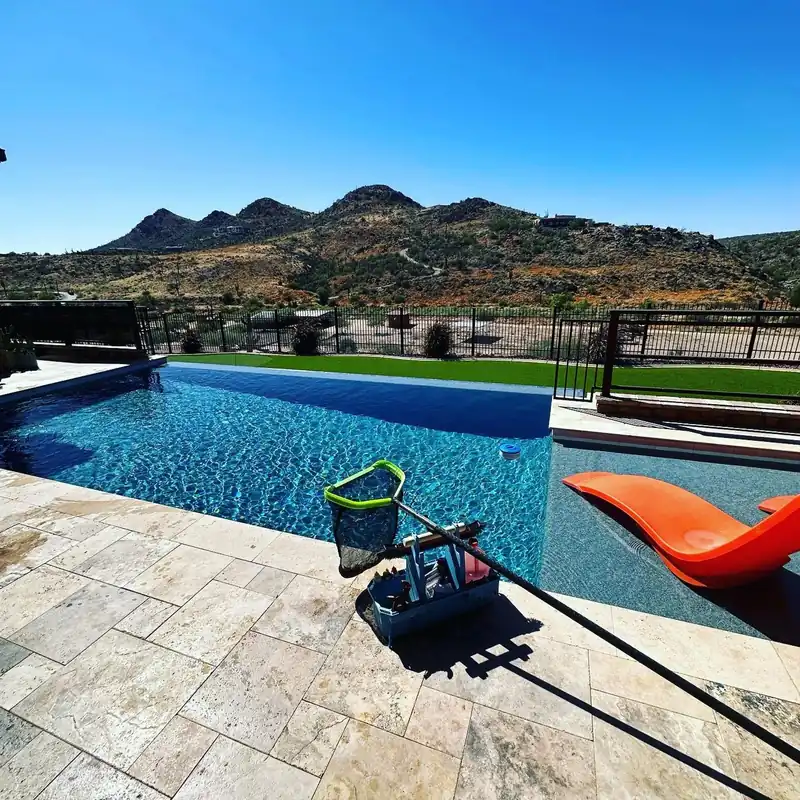
If you run a finger along the tile at your waterline and feel a rough, chalky ridge, you've found calcium scale. It's one of the most common complaints on pools in Paradise Valley, Scottsdale and the rest of the north valley, and it has a simple cause. Once you know it, you also know why a few small habits keep it from taking over.
Why it forms in the first place
Water in the Phoenix area is hard, which means it carries a lot of dissolved minerals, calcium among them. Those minerals stay dissolved while the water is in the pool. When the water evaporates, though, only the water leaves. The minerals stay behind, and the waterline is exactly where the evaporating happens.
The desert makes this faster than almost anywhere. Low humidity, heat and wind pull a lot of water from a pool through a long summer, and every top-off adds more minerals to the mix. Each wet-and-dry cycle along the tile leaves a thin ring, and rings stack up into a crust.
Not all deposits are the same
A fresh film of scale is soft enough to come off with a brush and a little effort. Left alone, it hardens, thickens and bonds to the tile. Some deposits are much tougher than others, and a few have more in common with glass than with chalk. That's why two pools with the same white line can need very different treatment.
There's another layer worth knowing about. Sunscreen, body oils and airborne dust cling to the waterline and give scale something to grab. So the band you see is often a mix of minerals and grime, and treating only one of them leaves the other behind.
Why weekly brushing makes a difference
Brushing the tile line is on every weekly visit for a reason. Regular brushing keeps deposits from setting, lifts oils before they harden into the scale and keeps the line looking even. Doing it every week is far easier on the tile than letting a year of buildup sit and then going after it hard.
Water balance does its part too. Water that runs out of balance, particularly with pH and hardness running high, is more likely to drop minerals out onto surfaces. Part of every weekly visit is testing and adjusting so the water stays balanced, which slows the whole process down. It won't stop evaporation, but it takes away some of the push.
Tile cleaning and calcium removal
When scale has built past what a brush can handle, the answer is a proper tile cleaning and calcium removal. The methods range from gentler treatments that soften the deposit to more aggressive mechanical work for thick buildup, and the right choice depends on the tile.
That's the reason to leave it to someone who has done it before. Glass and some specialty tiles scratch easily, while ceramic and stone take more abuse, and a method that's perfectly fine on one can permanently dull another. Lakeside offers tile cleaning and calcium removal, and the first step is looking at what kind of tile and what kind of deposit are in front of you.
Setting expectations
- Light scale often comes off cleanly and the tile looks close to new.
- Heavy scale that has sat for years can leave the tile slightly etched, even after it's removed.
- Removal doesn't prevent a return. Without upkeep the line will build again, just as it did the first time.
Keeping it from coming back
A few habits do most of the work. Brush the tile line regularly and keep up the weekly service that includes it. Keep the water level steady, since a level that swings up and down leaves more rings on the tile. Keep the chemistry balanced, and let your pool service know if the scale seems to be returning faster than before.
Over many years, dissolved minerals also build up in the water itself. When that happens, a partial drain and refill is sometimes part of the answer, and it's worth asking your pool pro before deciding on your own.
If you'd like someone to look at your tile line and tell you what's there, call or text Tony at (480) 363-6158 or email tony@lakesidepoolservicellc.com. A couple of close-up photos of the waterline will help him tell you what he'd expect to do.
Lakeside Pool Service LLC, (480) 363-6158
Call (480) 363-6158More articles
What a Weekly Pool Visit Should Cover in North Valley Heat
Every item on the weekly checklist has a reason behind it, and the desert makes most of those reasons more urgent.
DE or Cartridge Filter, and Why Both Need Cleaning Twice a Year
Your filter does the quiet work of keeping the water clear, and it can only do it while it isn't clogged.