Acid Wash or Chlorine Wash: Which One Your Pool Needs
The two sound alike but solve different problems, and picking the wrong one costs you time and plaster.
October 27, 2026 · 3 min read
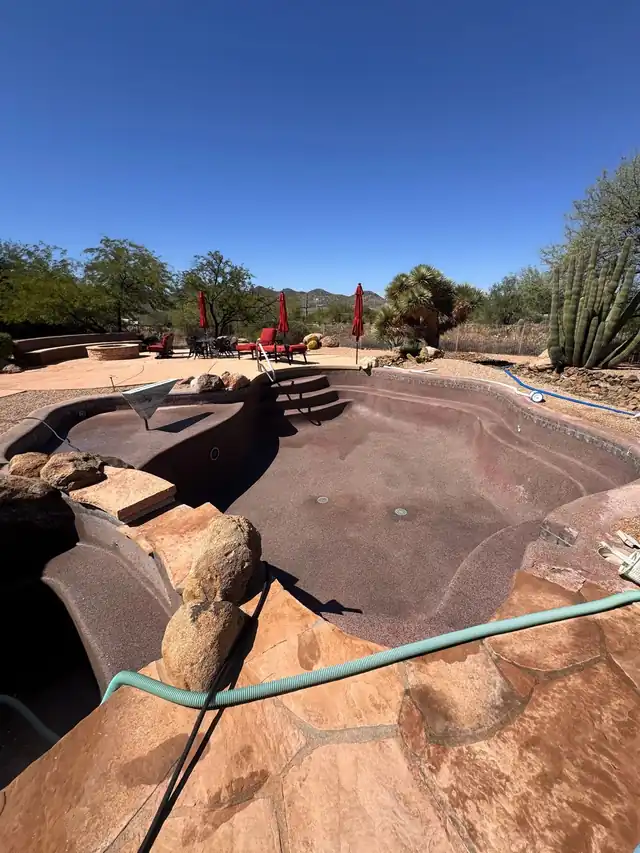
Pool owners hear acid wash and chlorine wash used almost interchangeably, and that leads to some expensive guesses. They're two different treatments for two different kinds of problems. Knowing which problem you have makes the conversation with your pool pro much shorter.
What a chlorine wash is for
A chlorine wash goes after organic problems. Think algae growth, the dark stains left by leaves and the dull film that follows a pool that sat green. The cleaning agent is chlorine-based, applied heavily and worked into the surface with a brush, and its job is to kill and lift what's living or what used to be.
It doesn't touch minerals. If the stain is organic, a chlorine wash may be all the pool needs. If the problem is white scale or a rust-colored or brown mineral stain, chlorine won't do much.
What an acid wash is for
An acid wash is a more serious treatment. It uses a diluted acid to remove a very thin layer of the plaster surface, and the deposits and stains on that layer go with it. It's the tool for heavy calcium scale on the walls and floor, mineral staining and plaster that has gone rough, dull or blotchy over the years.
Because it actually removes surface material, an acid wash isn't a routine treatment. Doing it repeatedly thins the finish. That's why it should be a decision made after looking at the pool, with the stain identified first. An acid wash used on an algae problem is the wrong tool, and a chlorine wash used on scale does nothing.
When draining makes sense
An acid wash is done with the pool drained, so the surface can be treated directly and rinsed. Draining is a real step, especially in Arizona. Plaster is designed to stay wet, and an empty pool in the sun is under stress. Groundwater can also push on an empty shell. Timing and technique matter, so draining is a job for someone who has done it many times, and it's not something to do on a weekend on a hunch.
In general, a drain and acid wash makes sense when the surface problem is widespread, when scale is thick, when stains are mineral and haven't responded to other treatments, or when the pool is being brought back after a long stretch of neglect.
What happens on the day
No two pools go exactly the same way, but the shape of an acid wash day looks like this.
- The pool is drained and the floor, steps and benches are cleared of debris.
- The surface is wet down, then the diluted acid is applied in sections and brushed in.
- The acid is rinsed off and neutralized so nothing is left on the plaster.
- Remaining residue and slurry are removed, and the surface is checked.
- The pool is refilled and the equipment is restarted.
The crew will be looking at the surface as they go. A drained pool shows things you can't see underwater, like rough patches, hairline cracks or hollow spots, and it's the best chance to take a good look at everything before the water goes back in.
Refilling and rebalancing
Refilling takes hours, and the water that goes in has its own chemistry, including the same hardness that built the scale in the first place. A freshly washed surface is also more sensitive than it was, so the days after are not the time to ignore the pool.
Once the pool is full, the pump runs, the water gets tested and the chemistry is brought into balance. Expect to brush the surface and keep close watch over the first stretch, with extra attention to pH and the filter, which has a lot of fine material to catch. Wait for the all-clear on the water before anyone swims. Lakeside also handles pressure washing and the equipment side, so the filter and pump are looked at while the pool is being brought back.
Which one do you need
Start with what you can see. Green or brown organic staining points toward a chlorine wash. White crust, mineral discoloration or a rough, dull surface points toward an acid wash. Many pools turn out to need a bit of both, one after the other, and some just need better weekly service and a tile cleaning.
The best way to find out is to have someone look. Call or text Tony at (480) 363-6158 or email tony@lakesidepoolservicellc.com with a few photos of the surface and the stains. He can tell you what he sees and whether a wash makes sense before anyone drains anything.
Lakeside Pool Service LLC, (480) 363-6158
Call (480) 363-6158More articles
What a Weekly Pool Visit Should Cover in North Valley Heat
Every item on the weekly checklist has a reason behind it, and the desert makes most of those reasons more urgent.
DE or Cartridge Filter, and Why Both Need Cleaning Twice a Year
Your filter does the quiet work of keeping the water clear, and it can only do it while it isn't clogged.